Eri Young Park
(she/her)based in Manhattan.
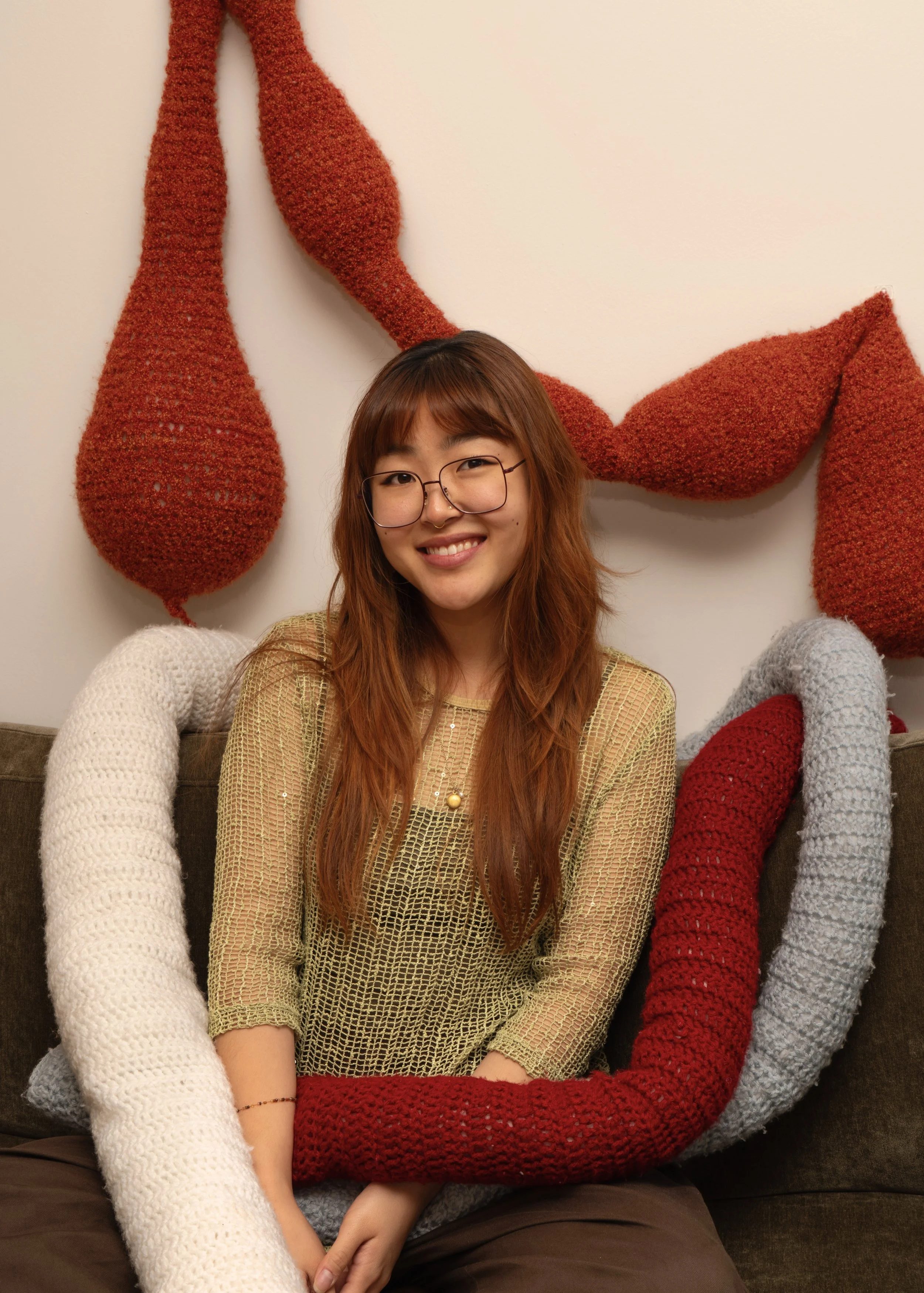
BFA from Carnegie Mellon University with a concentration in Sculpture, Installation, and Site Work.
I am an artist and educator working across large-scale painting, textiles, and sculpture. Creating art began as a need to find comfort and a genuine curiosity for raw materiality. Driven by a love for deliberate, process-heavy techniques, I view the physical labor as a meditative space. Often, it serves as a landscape for me to reconnect with childhood memories and navigate the tension between familiar spaces and the discomfort of a constantly changing world.
With a painting background, it felt natural to explore the surface I felt most comfortable with: the canvas. Abandoning the frame and smooth surfaces, I was left with the raw truth of the material: a long, vulnerable stretch of woven fabric with hundreds of threads interlacing with one another. How beautiful. By letting the unprimed canvas shine, the material itself begins to tell a story. Through this raw texture I revisit the physical sensations of my youth that have provided me with a constant sense of comfort. The cool relief of bathroom tile against my face, a rough sidewalk poking at my arms and legs, or the grit of sand as I buried myself beneath the surface.
My time at the Children’s Institute has been pivotal to my approach with art. Working daily with young students with disabilities, I learned, played, and created alongside them. Watching them interact with material through pure curiosity and all of their senses was transformative. I watched with joy as they covered their arms in paint, smeared tables with shaving cream, mapped out sprawling paths with beans, or shred plastic and throw them in the air to catch the glimmers of the sun. Their approach sparked a desire to bring that same sense of whimsy into my art. It was a reminder to find joy in the raw, tactile essence of making.